Current-cycle positioning
University guidance is framed around 2026 intake planning, not generic recycled brochure copy.
University Profile
Uzbekistan • Tashkent • Public
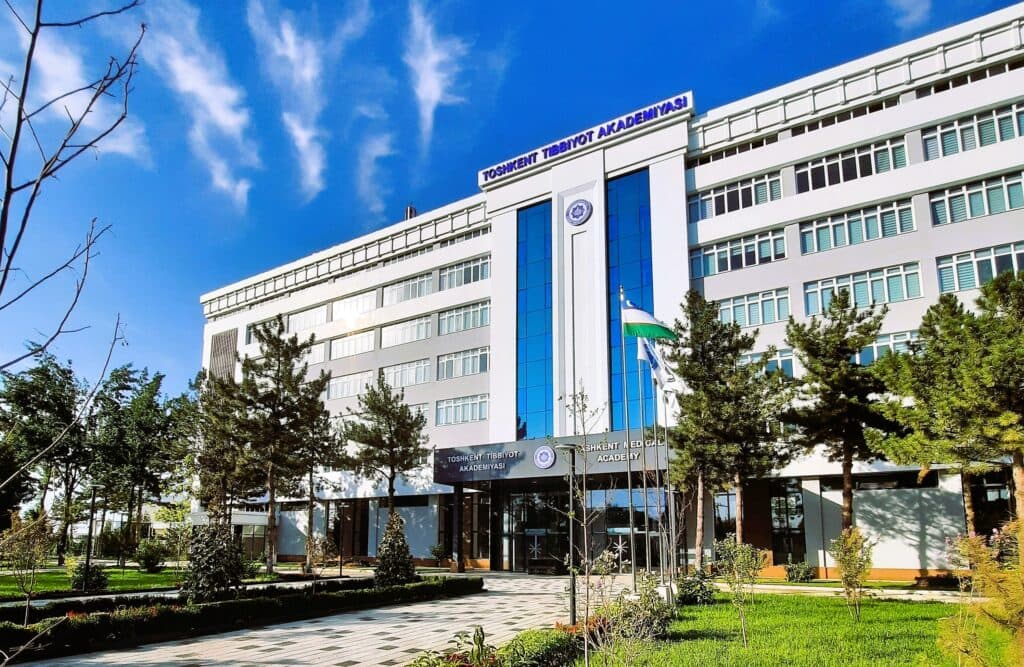
Tashkent Medical Academy, widely referred to in India as Tashkent State Medical University, is a long-standing government medical institution in Uzbekistan's capital. It is commonly shortlisted by Indian families for English-medium MBBS, city-based clinical exposure, and a relatively practical overall budget compared with many higher-cost destinations.
Capital-city government medical academy in Tashkent, offering English-medium MBBS for international students with strong clinical exposure and a practical overall budget for Indian families.
Trust Signals
This keeps the page conversion-focused without changing its structure: better decision clarity, lower perceived risk, and stronger premium trust.
University guidance is framed around 2026 intake planning, not generic recycled brochure copy.
Tuition and hostel are shown early so families can judge fit before moving into the full application flow.
Recognition, compliance, and long-term pathway questions should be resolved before admission payment.
Shortlisting works better when the same team supports profile review, applications, and onboarding.
USD 3,500
USD 650
Capital-city government medical academy in Tashkent with broad hospital-linked exposure; verify current intake circulars before final payment.
| Cost Head | USD | INR (≈₹83) |
|---|---|---|
| 1st Year Package (Approx.) | $7,000 | ₹5,81,000 |
| Tuition / Year (2nd to 6th year) | $3,500 | ₹2,90,500 |
| Hostel / Year (2nd to 6th year) | $650 | ₹53,950 |
| Mess / Year (2nd to 6th year) | $1,200 | ₹99,600 |
| Registration / Year (2nd to 6th year) | $250 | ₹20,750 |
| Visa / Year (2nd to 6th year) | $250 | ₹20,750 |
| Recurring Total / Year (2nd to 6th year) | $5,850 | ₹4,85,550 |
| 6-Year Total Estimate | $36,250 | ₹30,08,750 |
* This working fee sheet keeps the 1st year as an approximate package and lists the recurring fee heads for 2nd to 6th year separately.
Tashkent Medical Academy, often referred to by Indian students as Tashkent State Medical University, is a leading government medical institution in Uzbekistan. It is located in the capital city, Tashkent, and has a long history of medical education dating back to the early 20th century. Over the years, it has evolved through different institutional forms into the present-day academy, which teaches thousands of students at undergraduate and postgraduate levels. For Indian families, it is usually positioned as a capital-city MBBS option that combines government status, large teaching hospitals and a comparatively affordable overall budget when measured against many European destinations.
The current working fee sheet keeps the 1st year package around USD 7,000, covering admission-letter processing, invitation, visa, tuition, hostel, registration, counseling, application support, and travel/on-arrival coordination. From 2nd to 6th year, tuition is USD 3,500, hostel USD 650, mess USD 1,200, registration USD 250, and visa USD 250 per year, making the recurring yearly total about USD 5,850.
Tashkent Medical Academy operates multiple student hostels for local and international students. Rooms are generally shared by two to four students with basic furniture, and heating is typically available in colder months. Common kitchens/dining areas may be available depending on the building. Separate hostel arrangements for male and female students are usually maintained, with discipline and entry rules monitored by hostel administration. Being in the capital city, some students may choose nearby rental accommodation in later years where allowed. Living expense depends on individual lifestyle, but overall city costs are generally lower than many European capitals.
Student life combines structured academics with the experience of living in a major Central Asian capital. Indian students often create peer groups for study, food, and exam prep, helping adaptation during initial months. Tashkent offers public transport, parks, cafes, and shopping zones that make daily life manageable for first-time international students. Students are expected to maintain attendance, follow university policies, and respect local laws and culture throughout the 6-year MBBS journey.
“CollegeFlyer kept everything transparent. My parents understood each step before we paid anything.”
Tashkent State Medical University (Tashkent Medical Academy) is a government medical university in Uzbekistan and is listed in major international medical directories. Indian students who complete the full course duration and internship and then pass the FMGE / NEXT exam (whichever is in force at that time) can apply for medical registration in India, subject to the latest National Medical Commission (NMC) rules. CollegeFlyer always explains the current regulations during counselling so that parents clearly understand the pathway from admission to practice.
For international and Indian students, the MBBS programme at Tashkent State Medical University is offered in English-medium. Regular classes, internal tests and university exams for foreign batches are conducted in English. Basic Uzbek or Russian is also taught as a separate subject so that students can communicate with local patients during clinical postings. Parents should still confirm the exact English-medium arrangements for the specific intake year at the time of admission.
The current working fee sheet keeps the 1st year package around USD 7,000. From 2nd to 6th year, the recurring yearly total is about USD 5,850, which puts the working 6-year estimate near $36,250 (₹30.1L). Families should still confirm the latest written fee sheet before payment.
Tashkent State Medical University / Tashkent Medical Academy is recognised by the national health authorities of Uzbekistan and is listed in international resources such as the World Directory of Medical Schools (WDOMS) and WHO-type listings. It is also widely referenced by Indian consultants as being acceptable for Indian students who wish to appear in FMGE / NEXT after graduation, subject to current NMC regulations. Parents should always cross-check the latest recognition status and any updated NMC notifications during counselling.
Indian students applying to Tashkent State Medical University are generally required to: (1) complete 10+2 with Physics, Chemistry and Biology from a recognised board; (2) achieve at least 50% marks in PCB for General category (with possible relaxation for reserved categories as per current norms); (3) qualify NEET in the relevant year, as mandated by the NMC; and (4) be at least 17 years of age by 31st December of the admission year. These points should be re-confirmed for the specific admission session.
Most overseas MBBS intakes follow a timeline where applications begin several months before the academic session. For Tashkent State Medical University, it is advisable for Indian students to start the profile discussion and document preparation soon after NEET results or by the time they receive expected scores. This allows enough time for application, admission letters, fee planning, visa processing and travel preparation without last-minute pressure.
The current working fee sheet keeps the 1st year package around USD 7,000. From 2nd to 6th year, the recurring yearly total is about USD 5,850, which puts the working 6-year estimate near $36,250 (₹30.1L). Families should still confirm the latest written fee sheet before payment.
Most students pay their tuition fees in yearly or semester-wise instalments directly as per the university's official instructions. The initial payment is usually made after receiving the admission or invitation letter to confirm the seat. Remaining payments are scheduled according to the academic calendar. CollegeFlyer guides families on how and when to pay, the safest payment methods and how to keep proper proof of all transactions.
Tashkent State Medical University provides hostel facilities for international students and generally maintains separate accommodation arrangements for male and female students, either in separate hostels or on separate floors. Rooms are usually shared (2-4 students) and furnished with basic essentials such as beds, study tables and storage. Common kitchens, study rooms and recreational areas may also be available depending on the building. Final allocation always depends on availability and university policy for that intake, so families should treat hostel details as indicative and confirm the latest information before admission.
Yes, Indian students at Tashkent State Medical University usually have access to Indian-style food options. While the main university canteen may focus on local and international dishes, there are Indian mess or tiffin services, Indian restaurants and grocery shops in Tashkent where students can find familiar food. Many students either join a mess or cook together using hostel kitchens or in shared apartments. During counselling, CollegeFlyer helps families understand the practical options for food and approximate monthly costs.
Tashkent is generally considered a relatively safe and organised city, particularly in academic and residential areas. Student hostels typically follow entry/exit rules and may have security staff and basic safety systems in place. As with any capital city, students should still follow common-sense precautions: avoid unnecessary late-night outings, stay in groups when exploring new places, respect local laws and university rules, and remain in regular contact with parents. CollegeFlyer provides detailed safety and behaviour guidelines to both students and parents before departure.
Students usually travel to Tashkent by air from cities such as Delhi, Mumbai, Chennai and others, sometimes using direct flights and sometimes via a connecting hub depending on the airline schedule. Typical total travel times are in the range of a few hours for direct routes and somewhat longer for one-stop routes. Because flight routes and timings can change based on airline and air-space decisions, parents should always check the latest schedules and options before booking tickets.
In many batches, classes for international and Indian students are organised in relatively small groups to improve interaction and understanding. Early years focus more on basic and pre-clinical subjects, while later years gradually shift towards hospital-based clinical training. Teaching includes lectures, practical classes, tutorials and hospital rounds. The exact group size can vary from batch to batch, but the overall aim is to maintain manageable group strength so that students can ask questions and receive feedback from teachers more easily.
At Tashkent State Medical University, students typically spend the first years building a foundation in basic and pre-clinical subjects on campus. Hospital-based clinical exposure generally starts from the middle years of the programme, when students begin to visit clinical departments in medicine, surgery, paediatrics, obstetrics and other specialities under supervision. The number of hours spent in hospitals increases as students progress through the course, so that by the final years they are more confident in interacting with patients and reporting back to teachers.
Theoretical teaching for international students is done in English, but patients in local hospitals usually speak Uzbek or Russian. To handle this, the university includes basic local language training in the curriculum so that students can gradually learn to communicate at a practical level. In the initial years, teachers and local staff often support students in understanding histories and cases. By the time clinical exposure increases, most students are able to handle basic patient interaction while still reporting back to faculty in English.
Formal FMGE / NEXT preparation is usually a combination of the university's own curriculum, self-study and sometimes external coaching or online programmes chosen by students. Some departments and teachers may conduct revision classes or guidance sessions that are helpful for screening exams, but students should not assume that FMGE / NEXT coaching is guaranteed or identical to Indian coaching institutes. During counselling, CollegeFlyer can suggest practical ways to combine MBBS studies with structured preparation for the licensing exam.
The primary purpose of a student visa is education, and medical studies are highly demanding in terms of time and energy. Regulations on part-time work can vary, and in many cases foreign students are either not permitted or strongly discouraged from doing paid work while studying. Even where local rules might allow some limited work, it is generally not advisable for MBBS students to rely on part-time jobs, as it can affect their academic performance and attendance. Parents should treat MBBS as a full-time commitment.
Many Indian students who take a drop year or have one or more NEET attempts still go on to study MBBS abroad, including at universities like Tashkent State Medical University, provided they meet the current eligibility criteria (NEET qualification, required 10+2 marks, age, etc.). However, students with long gaps or complex academic histories should discuss their profile in detail with a counsellor so that the university choice and visa file are prepared carefully and transparently.
Transfers between foreign medical universities depend on multiple factors such as the number of completed years, syllabus matching, credit transfer rules and the receiving university's policy for that particular year. In some cases, limited transfers may be possible, but they are never guaranteed. Any student considering a transfer should share all transcripts and documents for a detailed evaluation. As a general rule, it is always better to choose the right university from the beginning rather than depending on transfers later.
Yes, parents can visit their child in Tashkent using an appropriate visa, subject to the usual immigration rules of Uzbekistan. The city has hotels and guest houses in different budget ranges, and parents can stay close to the university or hostels during their visit. Many families choose to visit either in the initial settling-in period or during vacations. CollegeFlyer can guide parents on practical aspects like ideal visit time, basic documentation and how to coordinate with the student and local representatives.
Get the latest brochure and fee sheet for Tashkent Medical Academy (Tashkent State Medical University) directly from our counseling team. No OTP verification is required.
Transparent counseling, NMC-aligned planning, and mentorship-driven admissions support.
Compare this university with alternatives by fees, hostel, city fit, and mentorship support.
Explore our latest Instagram highlights and stay connected with admission updates, counseling insights, and real student journeys at @collegeflyer.